
What Is SEO Marketing? How It Works, With Examples
See how SEO marketing works through a bicycle workshop example, illustrated page improvements, costs, paid-search comparisons and a practical starting checklist.
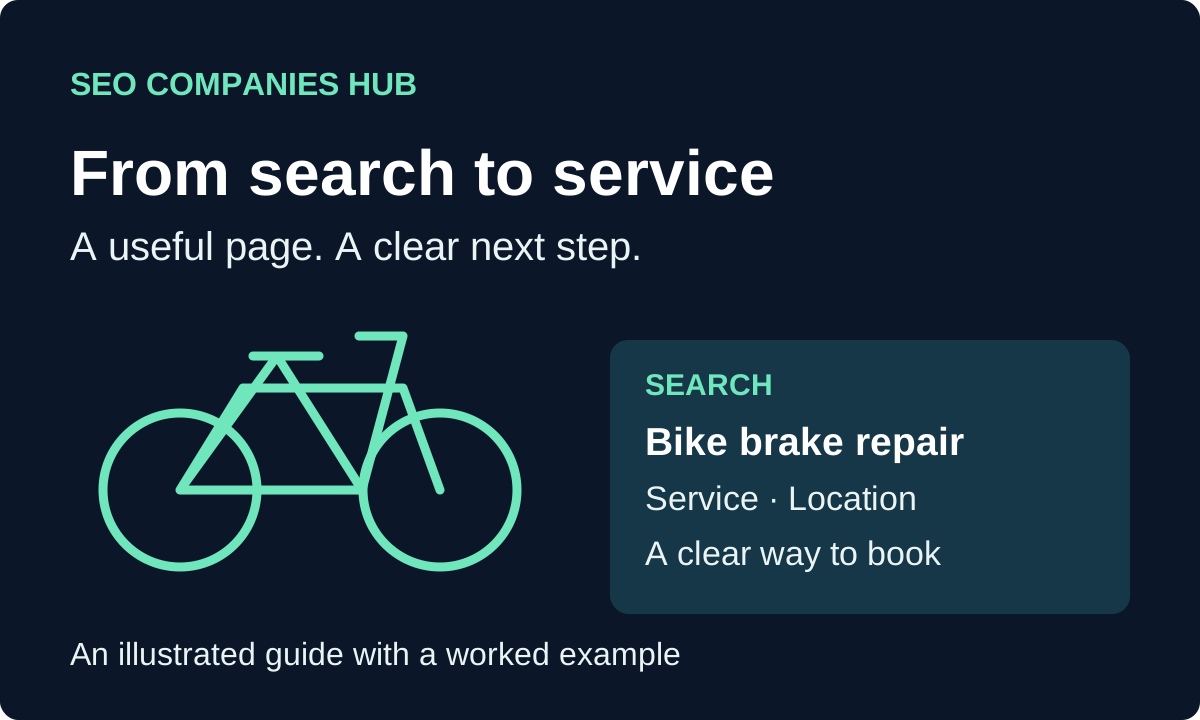
SEO marketing means improving your website so people can find your business in unpaid search results. SEO stands for search engine optimization. The work includes choosing relevant topics, improving pages, fixing technical problems and earning useful links from other websites.
For a business, the purpose is to reach people who need what it sells. A bicycle workshop wants repair bookings. An online shop wants product orders. A consultant wants inquiries from suitable clients.
Here is how that works, using a bicycle workshop as a running example. You will see what changes on its website, where paid advertising differs, and how the owner can judge the results.
What does SEO marketing look like in search?
Imagine searching for “bike brake repair in Bristol.” You want a nearby workshop that handles your brakes, explains the service and makes booking easy.
The results might include advertisements, a map with local businesses, and links to workshop websites. SEO concerns visibility in the unpaid results. Buying a search advertisement is a separate activity.
Google's definition of an organic search result (opens in a new tab) distinguishes unpaid listings from ads. A business can appear in both. Paying for advertising does not purchase a better organic position.
The same search can lead to different types of result.
Book a bike repair
An advertisement for a local repair service.
The business pays to advertise.
Riverbank Cycles
Bicycle repair workshopBusiness information and location matter.
Bike brake repair in Bristol
Rim and disc brake repairs. Request an inspection.
A relevant service page can appear here.
SEO is part of digital marketing, alongside advertising, email and social media. Its particular strength is reaching someone who is already searching for a product, service or answer.
That does not make every search commercially valuable. A person looking up “history of bicycles” has a different need from someone searching “bike brake repair near me.” The workshop should prioritize searches it can serve well.
How do search engines find and rank a page?
Google describes three stages in how its search engine works (opens in a new tab): crawling, indexing and serving results.
- 1Crawling: A program visits a page and retrieves its content. Links from other pages can help it discover the URL.
- 2Indexing: Google analyzes the page and may store information about it in its search index.
- 3Serving results: When someone searches, Google selects results it considers relevant to that query.
A published page can fail at any stage. It might be inaccessible, excluded from indexing or less relevant than other pages. An SEO review identifies which problem needs attention.
For the workshop, that means checking whether the repair page loads, can be indexed, clearly describes the service and helps a potential customer choose it. Google does not guarantee inclusion or a particular position.
What work does SEO involve?
Find the searches your customers make
A keyword is a word or phrase someone searches for. Search intent is what that person wants to accomplish. Start with customer questions, then examine the results for those searches to understand which answers are useful.
| Search | Suitable page |
|---|---|
| bike brake repair in Bristol | A local brake-repair service page |
| why are my bike brakes squeaking | A troubleshooting guide |
| replacement disc brake pads | A product or category page |
Try this with a service you sell: search its name and note whether the results mostly offer bookings, products or explanations. Open two useful results. List the questions they answer and what a customer would still need to know. Use that list to plan your page.
An online shop selling brake pads needs compatibility details and a purchase action. An accountant targeting tax-return help needs eligibility, scope and a consultation option. The right page depends on the buyer’s task, not just the words in the query.
Improve the page itself
On-page SEO includes the title, headings, main content, images and links on a page. Use those elements to explain the subject clearly. Google's SEO Starter Guide (opens in a new tab) recommends useful content, clear organization and descriptive links.
For a workshop, relevant detail could include the brake systems it repairs, where it operates, how an assessment works and how customers book. Original workshop photographs can show something a stock bicycle image cannot.
Fix technical obstacles
Technical SEO helps search engines access and understand the intended pages. Common work includes repairing broken links, fixing accidental indexing restrictions, resolving duplicate URLs and checking that essential content loads correctly.
A sitemap lists URLs for discovery. It does not guarantee that Google will index them. In Google's description of crawling and indexing (opens in a new tab), discovery is only the beginning of the process.
Build a reputation beyond your website
A backlink is a link from another website to yours. A local cycling club might link to a workshop it uses; a publication might reference an original maintenance guide.
Off-page SEO includes work to earn that kind of relevant attention. Buying links to manipulate rankings can breach Google's link-spam policies (opens in a new tab). A large number of purchased links is a poor substitute for a credible business and useful pages.
Keep local business information accurate
For an eligible local business, its Google Business Profile is another place customers can find its address, hours, services and reviews. The website and profile should describe the same business accurately.
Google says local ranking considers relevance, distance and prominence (opens in a new tab). Keep the profile complete and current, but remember that the searcher's location affects which nearby businesses appear.
A worked example: improving a bicycle repair page
Riverbank Cycles is a fictional Bristol workshop. Its existing website has a page called “Services,” containing the sentence “We repair all kinds of bikes” and a general contact link.
The owner wants more brake-repair inquiries. Here is what an improvement could look like.
Name the service, explain the next step, and make booking clear.
Services
We repair all kinds of bikes.
Learn moreBike brake repairs
Rim and disc brakes inspected at our workshop. Tell us your bike model and what feels wrong.
We confirm the work and price after inspection.
- Specific service
- Useful details
- Clear booking action
Start with a specific title and heading
Sample page title: Bike Brake Repair in Bristol | Riverbank Cycles
Sample main heading: Bike brake repairs at our Bristol workshop
The title names the service, place and business. The main heading gives visitors a straightforward description. There is no need to repeat “Bristol bike brake repair” in every sentence.
Answer the questions that decide a booking
The owner checks which services the workshop actually offers, then writes sample copy such as:
The page could then explain what an inspection covers, how customers leave their bikes, whether appointments are required and how they approve a repair quote. Those details must reflect the real service before publication.
Make the next action easy to complete
Replace a vague “Learn more” link with Request a brake inspection. Ask for contact details and a short description of the problem. Test the form on a phone and confirm that the request reaches the workshop.
Add a descriptive link to this page from the main services page. If an existing maintenance guide discusses brake problems, link to the service where that next step would help the reader.
Record when the page changes, then track the requests it brings in. A ranking or booking increase needs investigation before you attribute it to a particular edit.
A real page you can inspect
Our country directory provides an observable example, reviewed on 7 September 2026. Its heading says “SEO companies, country by country.” The main navigation links to it as “Countries,” and the page groups destinations by region.
A visitor can follow “United States” to the US directory or “United Kingdom” to the UK directory. The heading explains the page, navigation makes it reachable, and country links give visitors a specific next step. These are visible design choices, not evidence of a ranking gain.
SEO versus paid search: which should you use?
SEO develops your presence in organic results. Paid search buys advertising opportunities through a platform such as Google Ads. The costs and controls differ.
| SEO | Paid search |
|---|---|
| Work on pages, technical access and reputation | Set up ads, targeting and a campaign budget |
| No charge for an organic listing or click | Advertising spend is separate from management costs |
| Search engines decide whether and where pages appear | Platform rules and the ad auction affect delivery |
| Existing pages can keep attracting visits, but require maintenance | Pausing a campaign stops its ads from serving |
For a workshop with an urgent need for bookings, a paid campaign may be worth testing while its service pages improve. For either channel, the owner still needs a useful offer and a reliable booking process.
SEO can be a poor first priority if nobody searches for the offer yet, the business cannot serve additional customers, or the website's purchasing process is broken. Address those constraints when deciding where to spend time.
Our comparison of customer acquisition channels covers the broader trade-offs. If a proposal uses “SEM,” ask whether it means paid search alone or both paid and organic search; the term is used both ways.
How to tell whether SEO is helping
Google's Search Console Performance report (opens in a new tab) shows impressions, clicks, click-through rate and average position. Impressions count appearances; clicks record interactions that lead away from a search result. Click-through rate is clicks divided by impressions.
For activity on your website, use analytics and booking records. In GA4’s Traffic acquisition report (opens in a new tab), inspect Organic Search under the session channel grouping. Sessions are visits to the site; they are not interchangeable with Search Console clicks or a count of individual people.
For the workshop example, follow 200 organic sessions on the repair page. Suppose ten of those sessions each produce one booking request, and six of those requests become completed repairs. Follow those requests to completion, even if the work happens in a later reporting period.
Follow the same group of visits through to completed work.
Six completed jobs from the original 200 sessions.
How the rates are calculated
Requests: 10 ÷ 200 × 100 = 5%. Completions: 6 ÷ 10 × 100 = 60%. Overall: 6 ÷ 200 × 100 = 3%.
Give each request a booking reference and record its source and final status. Count successful submissions rather than button clicks, and remove test or duplicate requests. Match completed jobs to those references; six unrelated repairs during the same month would not establish this completion rate.
Record a baseline before changing the page. Compare equivalent periods with the same definitions, noting seasonal demand, promotions and other website changes. A single period shows performance, but does not establish improvement or prove that SEO caused it.
If sessions rise but requests do not, inspect the page and form. If requests rise but completed jobs do not, examine lead quality, availability and follow-up. The remedy depends on where people stop.
Also distinguish searches for the business name from other searches. Someone who saw a shop sign may later search its name; assigning that visit to organic search does not mean SEO created the customer's interest.
Use the SEO reporting template for a recurring review. For a financial assessment that includes costs, use the guide to calculating SEO ROI.
How long does SEO take, and how should you budget?
Google's guidance on hiring an SEO (opens in a new tab) says benefits typically take four months to a year after changes begin. Treat that as a broad expectation; the work, competition and starting condition of the site vary.
An indexing error and a weak set of service pages require different work. Ask what problem is being fixed, when the changes will be implemented and which signals should improve first.
There is no single price for SEO: the scope determines the bill. Choose the arrangement that matches the work you need.
| Arrangement | What to budget for |
|---|---|
| Do it yourself | Your learning and implementation time, plus any tools or development help |
| One-off project | A defined job, such as fixing indexing problems or improving a group of service pages |
| Ongoing retainer | Recurring research, implementation and review, with agreed responsibilities |
Ask each supplier to quote the same scope and separate recommendations from implementation. Our US retainer pricing guide compares programme sizes; its market-specific figures are not universal quotes. The in-house versus agency guide covers staffing trade-offs.
Use the guide to what an SEO company does to check which deliverables a proposal should explain.
Your first SEO task: check and improve one page
Choose one service or product you want customers to find. Set aside time to check its page and record a starting point before editing it.
- 1Check indexing. Open the verified Search Console property for your site. Paste the complete page URL into the inspection bar. Read the indexed status and any exclusion reason. Google’s URL Inspection instructions (opens in a new tab) explain how to test the current page separately from its indexed version.
- 2Inspect relevant searches. In the Search results Performance report, filter to that page and inspect Queries. Note searches that match your offer. A new page may have little data; start with customer questions and examine the results for those searches instead.
- 3Choose one improvement. Compare the page with the buyer’s task. Fix a missing service detail, vague title or confusing next step. Link to the page from the relevant service or product category.
- 4Test the action. Submit a test request on a phone. Confirm it reaches the right person and is recorded as a successful submission. Exclude that test from reporting.
- 5Record and review. Save the change date and baseline. Revisit indexing, relevant searches, organic sessions and completed requests using consistent definitions. Use the findings to choose the next change.
A successful live URL test does not guarantee indexing. If access or indexing restrictions are the problem, resolve those before judging the page’s performance. For a plan spanning several pages, use the business-goals-to-SEO roadmap.
SEO marketing FAQs
Is SEO just writing blog posts?
No. Product pages, service pages, categories and useful tools can all attract organic search visits. A workshop may need a clearer repair page before it needs a publishing schedule.
Can I do SEO myself?
Yes, if you can edit the site and set aside time to learn. Start with accurate pages, working links and Search Console. Bring in a specialist when technical problems or the amount of work exceed your skills or availability.
Does SEO still matter for Google's AI results?
Google says its existing SEO practices apply to AI Overviews and AI Mode (opens in a new tab). It does not require special optimization or additional technical requirements for those features. Useful, accessible pages remain the starting point; inclusion is not guaranteed.
Can I use AI to help write SEO content?
AI can help organize research or a draft. Check every claim, add details from the actual business and remove material that does not help the reader. Google's generative-AI content guidance (opens in a new tab) warns against creating many pages without adding value.
SEO Companies Hub Editorial
Directory Research
SEO Companies Hub publishes independent, research-backed guidance for US businesses choosing an SEO partner. We score agencies on published facts, separate marketing claims from evidence, and date-check anything that can change.